Problem
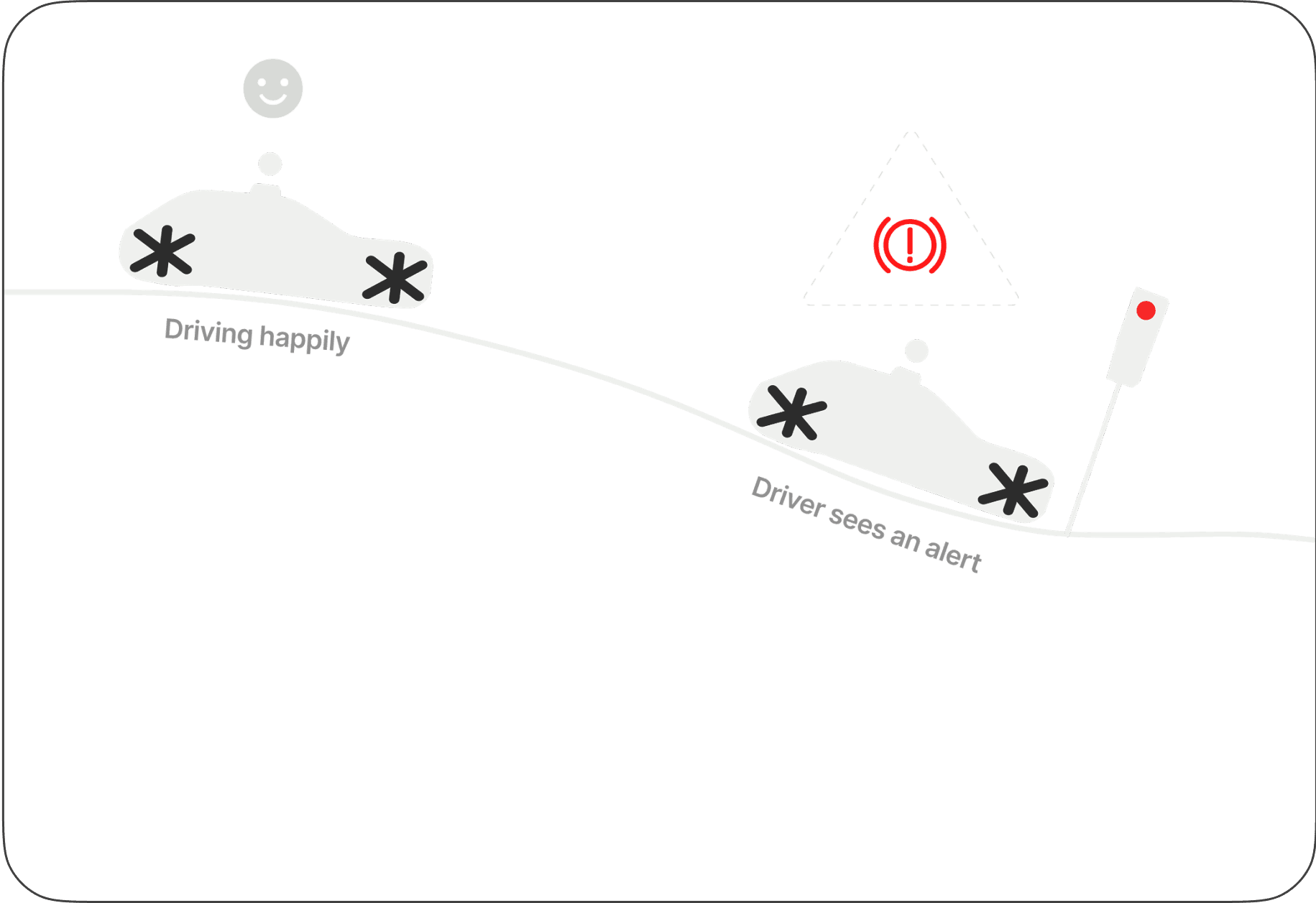
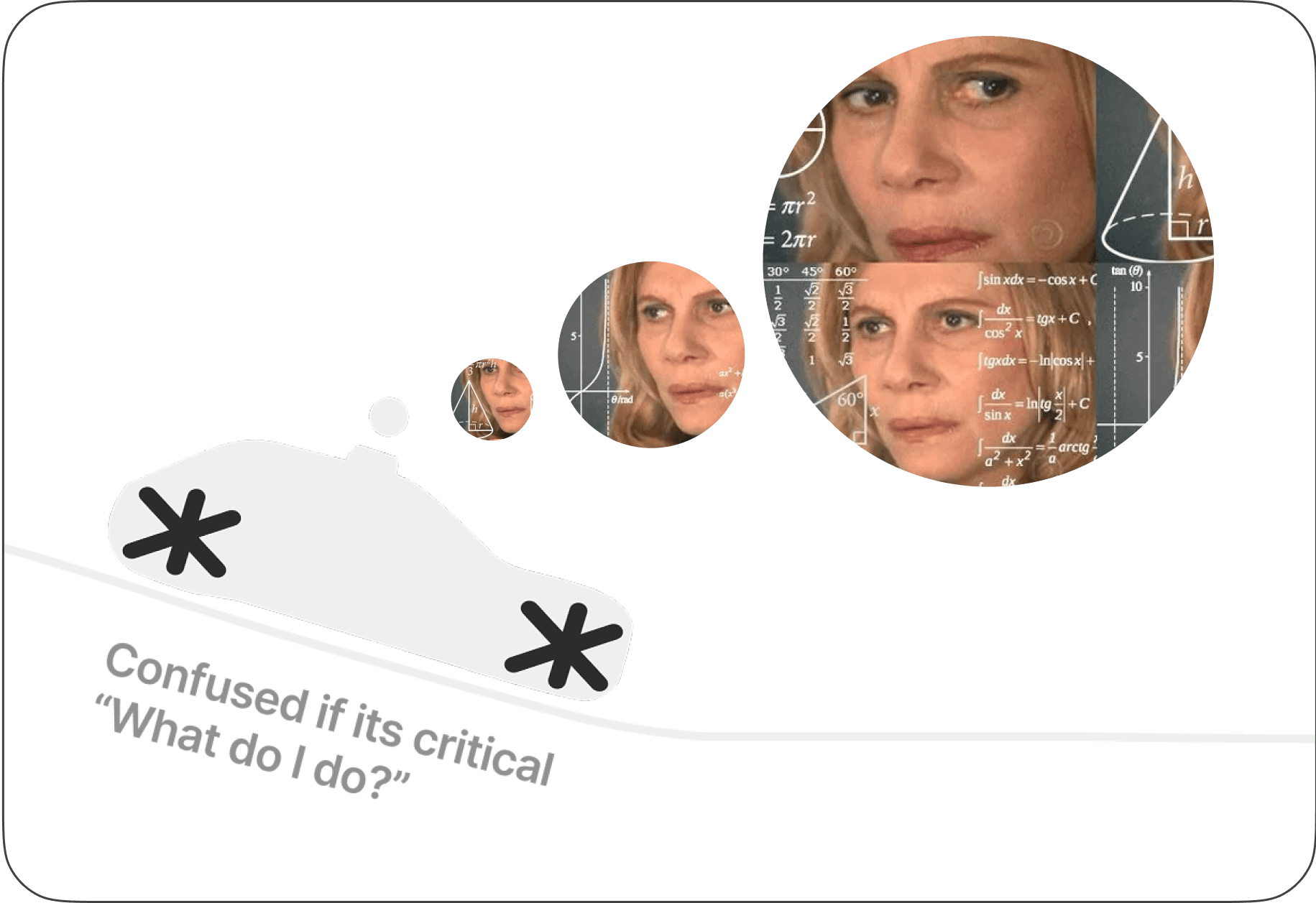
Aptera's HMI lacked a warning system, offering no visibility into critical and non-critical alerts.
Compliance & Research
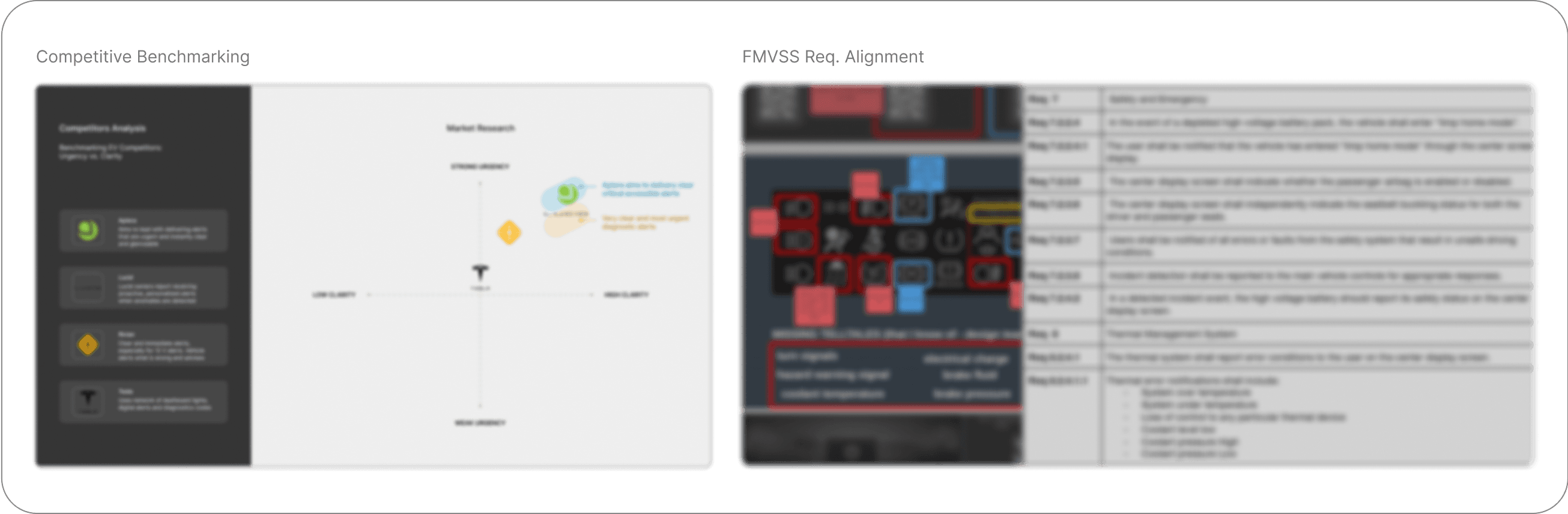
We streamlined Aptera’s Launch Edition telltales by aligning with FMVSS standards and collaborating with the
electrical team. Benchmarking leading EVs then guided how we refined alerts to balance clarity and urgency for drivers.
Design Framework
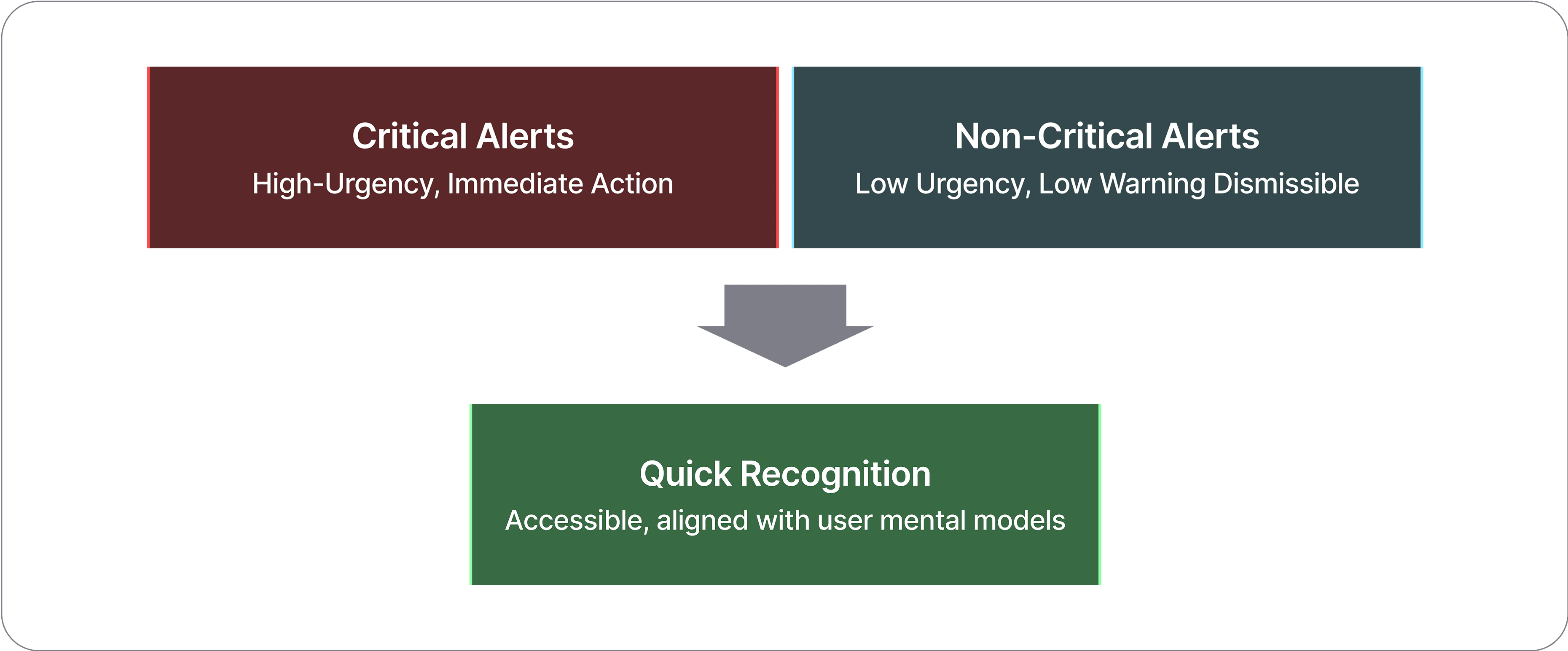
Our design strategy centered on building a framework that structured alerts into two types: critical and non-critical—for a unified driver response. After defining launch edition telltales, we applied our design principles to critical and non-critical alerts—each requiring different interactions but leading to the same outcome: clear, safe, user-centered communication.
Solution
Following our design framework, we split the solution into two parts : legibility and comprehension.
Alerts had to be instantly legible and quickly understood by drivers within the brief moments available.


Legibility : Decluttering telltales
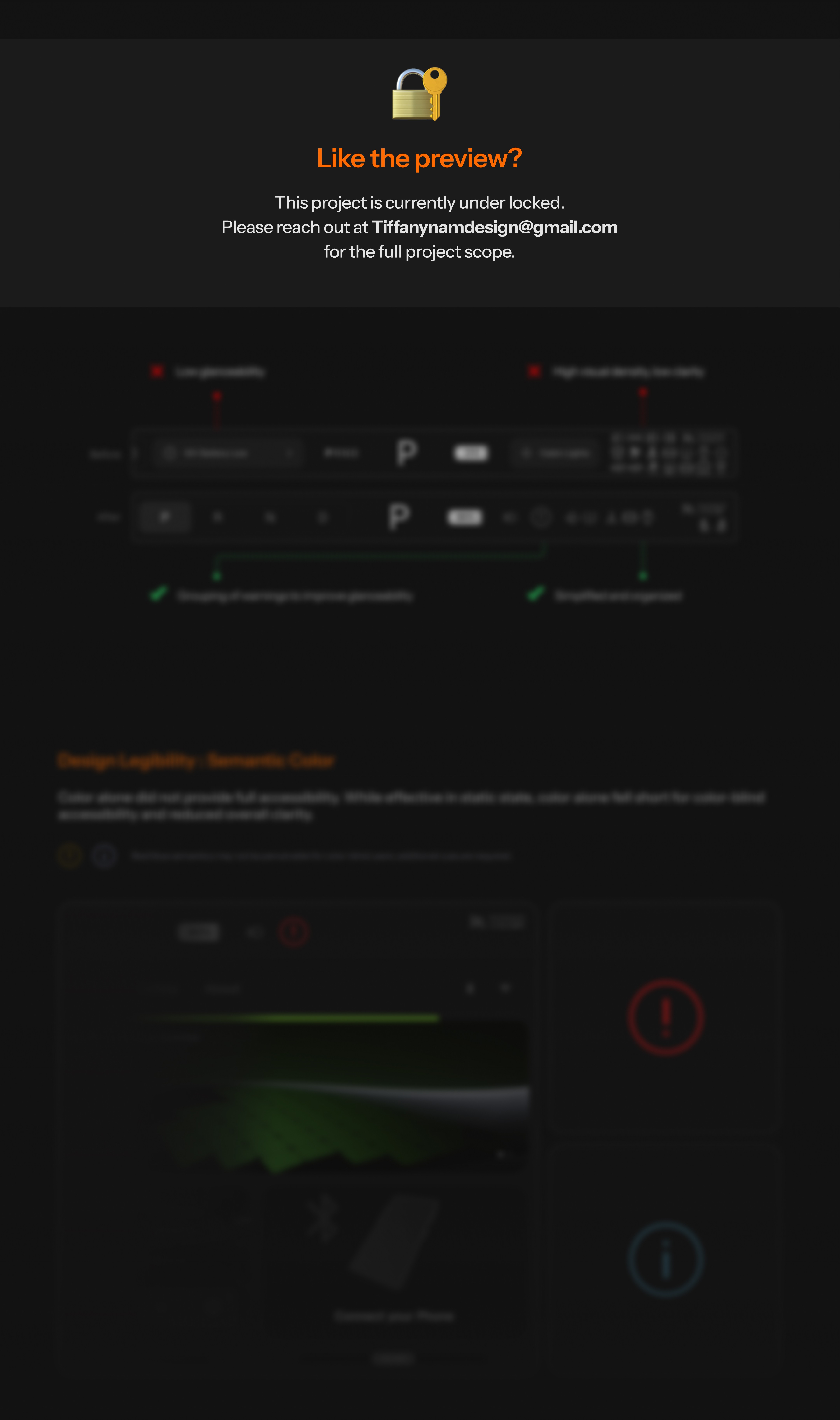
Making required telltales more glanceable was the first priority. Early iterations used a generic grid, but after filtering for compliance and aligning with Launch Edition needs, we optimized placement for faster, clearer recognition.
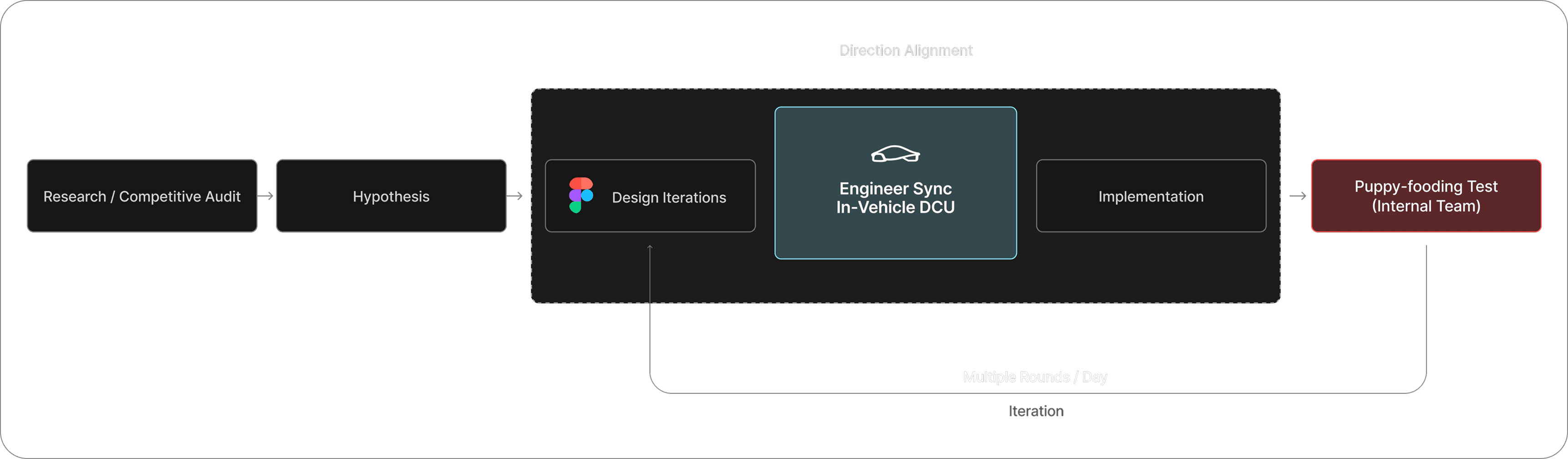
Design Process
Following our design framework, we split the solution into two parts : legibility and comprehension.
Alerts had to be instantly legible and quickly understood by drivers within the brief moments available.
Want to see more?



Aptera Web Project
Archive
About me
❀
© 2025 Tiffany S. Nam
All Rights Reserved
Introducing the Aptera UI ⤵

Outcome
Timeline
Jan-April 2025
Role
UX Designer
Platform
In-Vehicle HMI
Team
1 Head of Design
1 UX Designer
1 Graphic Designer
1 Engineer
1 Software Head
Context
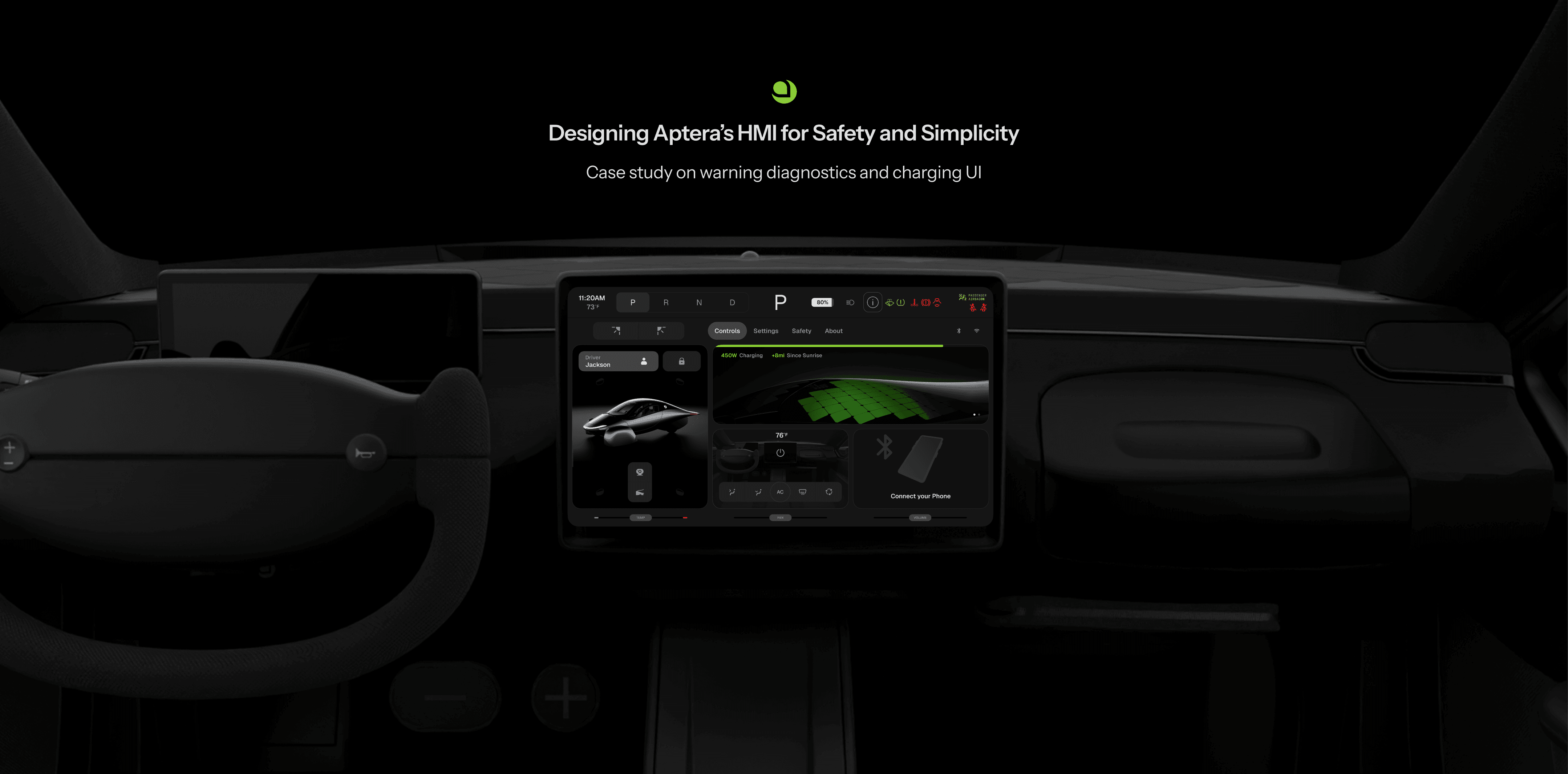
Aptera is the first solar EV built for efficiency and simplicity, requiring no charge for daily use. Its HMI unifies drive state, solar charge and settings into one intuitive screen.